A record year of big deals… but rising occupational costs causing concern
Industrial Focus
While big boxes flew off the shelf in 2025, smaller units saw significantly less action. Industrial agents are also growing increasingly concerned about the impact of rising costs on smaller occupiers – not least the upcoming business rates revaluations – while build and land costs are acting as a brake on the supply pipeline.
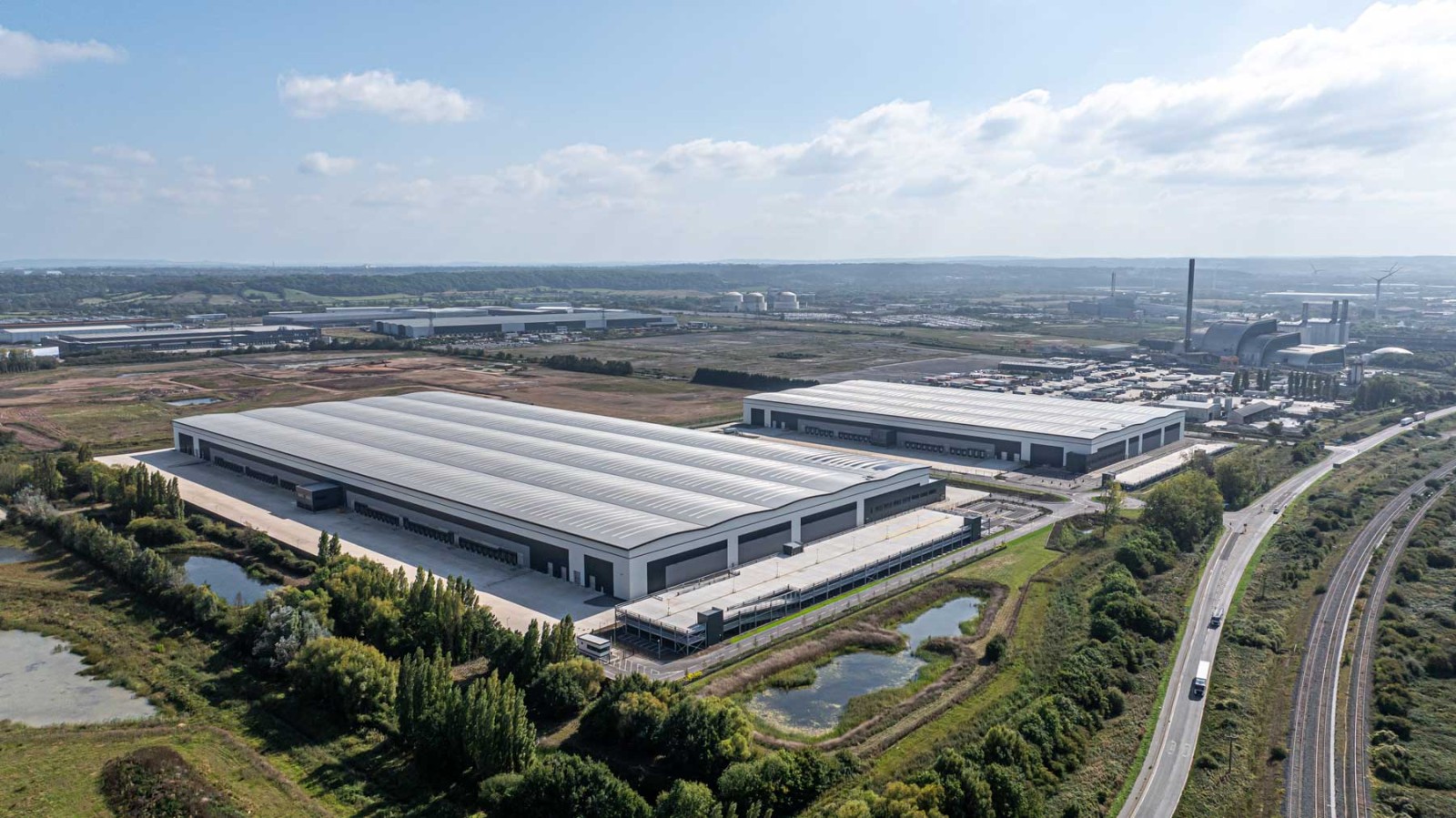
The big story for the industrial and distribution sector during 2025 has been the total take-up of 4,524,381 sq ft across 182 deals – comfortably ahead of the previous record take-up of 4.3m sq ft in 2016 – in addition to the sale/letting of a further 25.39 acres (a mix of leasehold and freehold).
To put this into perspective, the five-year average is approximately 2m sq ft and the 10-year average is 2.3m sq ft.
Doubling the long-term averages is primarily explained by a number of significant big deals landing in the same year.
The biggest letting was GXO Logistics taking an 885,000 sq ft logistics facility at Panattoni Park in connection with a contract for their client Amazon;
M&S, who have been weighing up their regional options for several years, finally agreed to take 390,000 sq ft at Axis Works, Avonmouth to house their new regional food distribution centre. Construction commenced in late 2025, and is expected to be operational by the summer of 2026;
Waitrose, meanwhile, have taken 360,000 sq ft at Bristol 360;
Bathroom supplier Roper Rhodes agreed terms on 235,000 sq ft at the Matrix 49 development; and
Domino’s Pizza Group secured 100,000 sq ft of logistics space at More+ in Avonmouth to house a new, automated Supply Chain Centre (SCC5) to serve their South West distribution network.
Deals at the bread-and-butter end of the market, sub 20,000 square feet, have been notably thinner on the ground – even more so for buildings below 10,000 square feet, which typically account for 65 - 70% of total take up.
Sentiment, stock levels and rents
With relatively little new units coming out of the ground in 2025, stock levels across the Bristol market have significantly diminished, although voids, particularly on multi-tenanted estates, are now starting to appear and these will enable a level of churn going into 2026.
Against the relatively rosy backdrop of 2025’s take-up figures, there are growing concerns around rising costs for industrial occupiers: rents have soared – with some city centre units doubling over the last three years.
Added to this, businesses are having to shoulder increased costs in the form of National Insurance contributions and wages… while the upcoming rates revaluation will add further pressure: agents are concerned that the implications of the revaluation for businesses have not been fully appreciated.
This combination of factors is expected to hit smaller businesses hardest, and there is an expectation of administrations and receiverships creating voids during 2026.
Asking rents, which have rapidly moved northwards over the last few years, have also lost momentum as sentiment has weakened: they are currently around £15psf to £16pf for prime smaller space and £9.50psf to £10psf for larger units.
Despite the dip in business sentiment, and wider concerns around the resilience of the broader economy, landlords are taking a relatively hard-nosed view at present, especially bigger overseas funds: while there are more incentives being negotiated, rents are holding firm, but agents expect some corrections if voids continue to increase during 2026.
The issue of energy supply is growing in significance for many occupiers, especially those with EV fleets and/or large refrigeration requirements – adding to the attraction of those estates and buildings which are well supplied. Longer term there are concerns that there will be increasing pressure on the grid locally as occupiers have been persuaded to move away from gas to meet EPC regulations.
As tenants become more and more power hungry, there is a growing risk that developments unable to meet these needs are going to find it difficult in the future to attract some occupiers.
Supply
With continuing high land and build costs dampening developers’ enthusiasm, along with industrial yields edging outwards in the last 12 months, relatively little new stock is currently coming through the pipeline – particularly on the multi-let side.
One notable exception is on Severnside where Chancerygate are now on site at Kestrel Park, located adjacent to the new Junction 1 on M49. Due to be completed this year, the scheme will be offering units between 16,000 sq ft – 33,000 sq ft.
As a footnote, the long-awaited junction is expected to open this summer.
In the north of the city, located within the larger Horizon 38 development, Cubex and Fiera Real Estate’s “Skyline” scheme at Filton is offering 75,000 sq ft of Grade A logistics space across eight units ranging from 5,000 sq ft to over 16,000 sq ft, and which can be combined to form larger spaces.
Also in North Bristol, Tungsten Properties in a joint venture with Euro Property Investments Limited (EPIL) is developing a five-unit, multi-let industrial scheme on a 4.6-acre site on Hayes Way, with individual unit sizes ranging from 10,000 sq ft to 30,000 sq ft. Construction is expected to begin in Spring 2026, with completion targeted for Q4 2026.
Larger units currently available locally include:
A single 407,367 sq ft unit is Panattoni Park Avonmouth
Several high-spec units are available or under construction at Indurent Park, Access 18, with sizes including 215,362 sq ft, 82,752 sq ft and 55,034 sq ft
Units between 47,745 to 94,361 sq ft at More+, Central Park
A single unit of 116,316 sq ft at DC115 Cabot Park
There are a number of 100,000 square foot plus requirements in the market at the moment, several of these being 200,000 sq ft plus. With only a handful of units of that size available, should two or three of these requirements materialize, the supply landscape could change further.
The growth in rents has led to cannier asset managers approaching tenants looking to rightsize their operation or near the end of a lease, and offering to release them without dilapidations – enabling them to remarket at the new rent. Conversely, the challenge for tenants close to a lease event is finding premises within their affordability range.
And while concerns remain about the shrinking availability of business space in traditional locations like St Philips, occupiers operating, or wanting to operate centrally are also finding Bristol’s rising drive times increasingly problematic – leading to some shifting their focus to further out of the city centre.